
Understanding Kyphoplasty and Vertebroplasty: Minimally Invasive Treatments for Spine Fractures
Vertebroplasty and kyphoplasty are minimally invasive procedures used to treat vertebral compression fractures, a common consequence of osteoporosis or spinal trauma. These procedures aim to relieve pain, stabilize the fractured vertebra, and restore vertebral height. This webpage provides detailed information about vertebroplasty and kyphoplasty, including their indications, procedure details, benefits, and risks.
What are Vertebroplasty and Kyphoplasty?
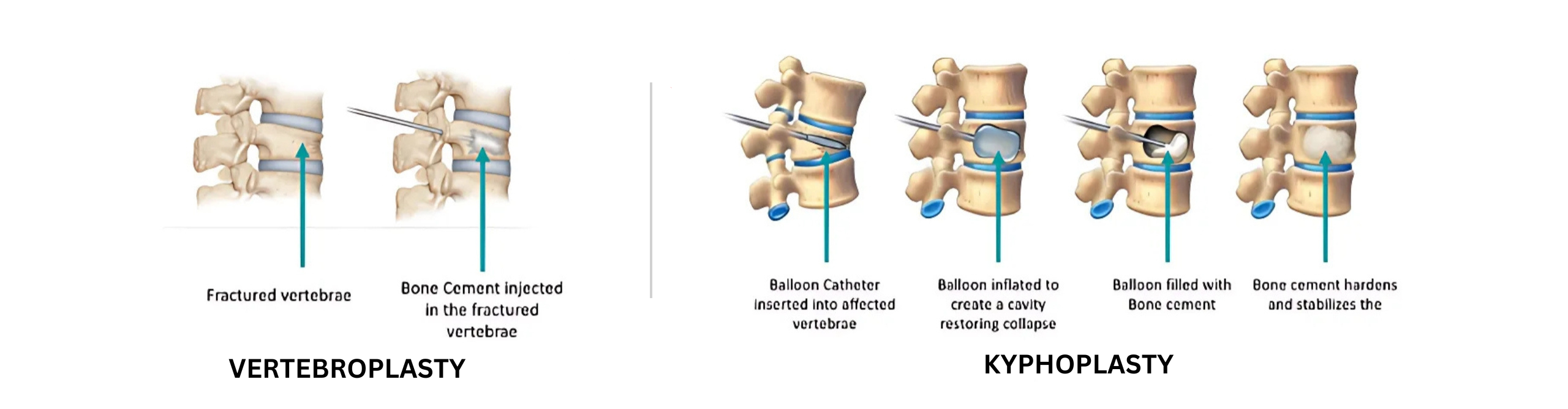
Vertebroplasty and kyphoplasty are both minimally invasive procedures performed under fluoroscopic guidance to treat vertebral compression fractures. These fractures typically occur in the thoracic (mid-back) or lumbar (lower back) regions of the spine and can cause severe pain and disability. Both procedures involve the injection of bone cement into the fractured vertebra to stabilize the fracture and alleviate pain. While similar in principle, there are some differences between vertebroplasty and kyphoplasty in terms of technique and outcomes.
Vertebroplasty:
– In vertebroplasty, a special bone cement is injected directly into the fractured vertebra through a small incision in the skin.
– The cement hardens quickly, stabilizing the fracture and providing immediate pain relief.
– Vertebroplasty is typically performed under local anesthesia or mild sedation and can be done on an outpatient basis.
Kyphoplasty:
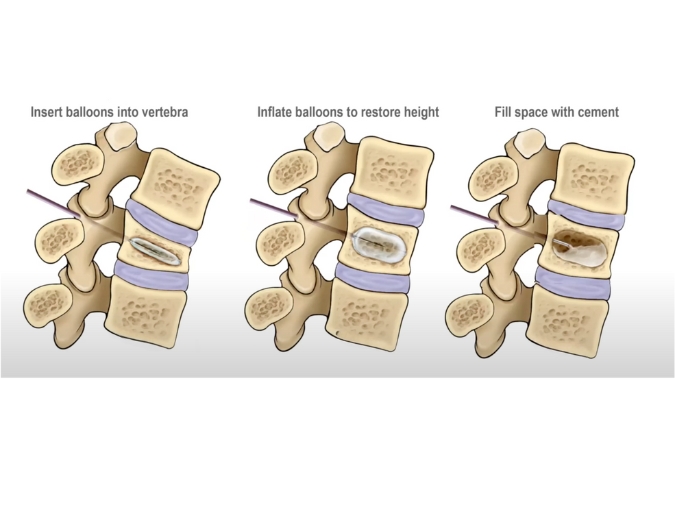
– Kyphoplasty involves the use of a balloon-like device to create a cavity within the fractured vertebra before injecting the bone cement.
– The balloon is inflated to restore the height of the collapsed vertebra and create space for the cement.
– Once the cavity is created, the bone cement is injected, stabilizing the fracture and reducing spinal deformity.
– Kyphoplasty is also performed under local anesthesia or mild sedation and is usually done on an outpatient basis.
Indications for Vertebroplasty and Kyphoplasty:
Vertebroplasty and kyphoplasty may be recommended for individuals with:
– Painful vertebral compression fractures due to osteoporosis or trauma
– Persistent pain despite conservative treatment measures such as pain medication and bracing
– Progressive spinal deformity or loss of vertebral height
– Neurological symptoms such as weakness or numbness due to spinal cord compression
Procedure Details:
- Preparation: Patients undergo pre-procedure imaging studies such as X-rays, CT scans, or MRI scans to assess the location and severity of the fracture.
- Anesthesia: Both vertebroplasty and kyphoplasty are typically performed under local anesthesia with sedation. General anesthesia may be used in certain cases.
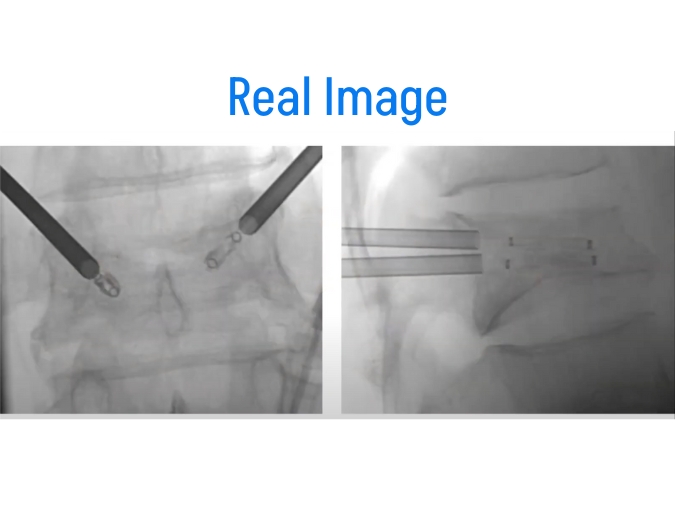
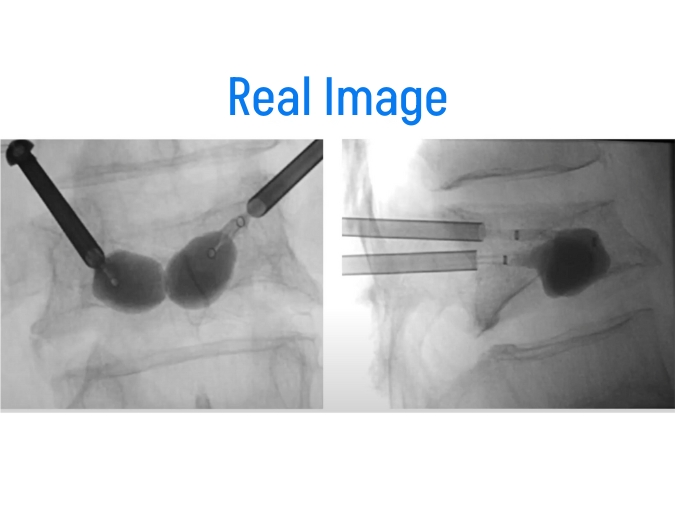
- Procedure: The procedure is performed by an interventional radiologist or spine surgeon. Using fluoroscopic guidance, a small incision is made in the skin, and a needle is advanced into the fractured vertebra. In vertebroplasty, bone cement is injected directly into the vertebra. In kyphoplasty, the balloon is inserted and inflated to create a cavity before injecting the cement.
- Recovery: After the procedure, patients are monitored for a short period in the recovery area before being discharged home. Most patients experience immediate pain relief and can resume normal activities within a few days.
Benefits of Vertebroplasty and Kyphoplasty:
– Rapid pain relief: Both procedures can provide immediate pain relief, allowing patients to resume normal activities.
– Improved vertebral stability: The injected bone cement stabilizes the fractured vertebra, reducing the risk of further collapse or deformity.
– Minimally invasive: Vertebroplasty and kyphoplasty involve small incisions and minimal tissue disruption, leading to faster recovery times and fewer complications compared to traditional open surgery.
– Restored vertebral height: Kyphoplasty, in particular, can help restore the height of collapsed vertebrae, reducing spinal deformity and improving posture.
Risks and Complications:
While vertebroplasty and kyphoplasty are generally safe procedures, they carry some risks, including:
– Cement leakage into surrounding tissues
– Infection
– Nerve or spinal cord injury
– Allergic reaction to anesthesia or bone cement
Conclusion:
Vertebroplasty and kyphoplasty are effective minimally invasive treatments for vertebral compression fractures, providing rapid pain relief and restoring vertebral stability. If you or a loved one is experiencing symptoms of a spine fracture, consult with a spine specialist to determine if vertebroplasty or kyphoplasty may be appropriate. With proper evaluation and treatment, many individuals can experience significant improvement in pain and function, leading to a better quality of life.
This webpage serves as a comprehensive resource for individuals seeking information about vertebroplasty and kyphoplasty, empowering them to make informed decisions about their spine health and treatment options.
Disclaimer: This webpage is intended for informational purposes only and should not be considered medical advice. Patients should consult with their healthcare providers to determine the most appropriate treatment options for their specific condition.


