
Laminectomy and Laminoplasty: Restoring Spine Health
Laminectomy and laminoplasty are surgical procedures designed to relieve pressure on the spinal cord and nerves, often caused by conditions like spinal stenosis, herniated discs, or spinal tumors. Both procedures aim to create more space within the spinal canal, but they differ in technique and application.
What Is a Laminectomy?
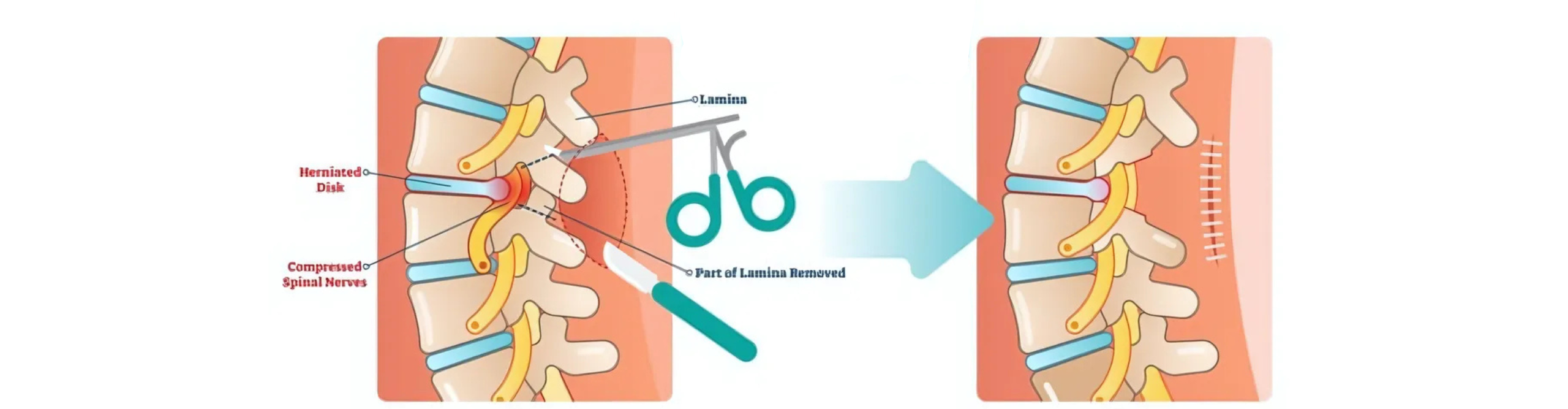
A laminectomy involves the removal of the lamina, a part of the vertebra that covers the spinal canal. By removing the lamina, the surgeon reduces pressure on the spinal cord and nerves, alleviating pain and other symptoms.
Conditions Treated with Laminectomy
- Spinal stenosis
- Herniated discs
- Spinal tumors
- Traumatic spinal injuries
Benefits of Laminectomy:
- Immediate relief from nerve compression symptoms
- Improved mobility and quality of life
- Can be combined with spinal fusion for stability
The Procedure:
- Performed under general anesthesia.
- A small incision is made over the affected area.
- The lamina is carefully removed to decompress the spinal canal.
- In some cases, bone grafts or hardware may be used to stabilize the spine.
What Is a Laminoplasty?
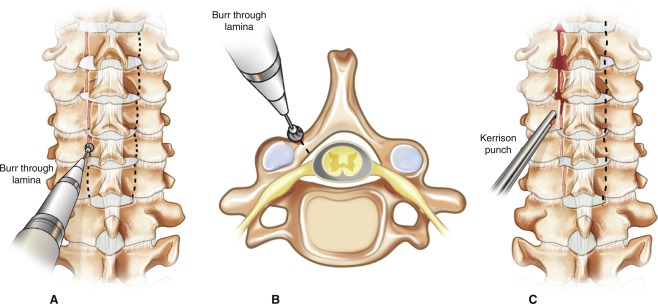
Laminoplasty is a reconstructive surgical procedure often used in the cervical (neck) spine. Instead of removing the lamina, the surgeon reshapes and repositions it to create more space for the spinal cord while preserving spinal stability.
Conditions Treated with Laminoplasty:
- Cervical spinal stenosis
- Ossification of the posterior longitudinal ligament (OPLL)
Benefits of Laminoplasty:
- Preserves spinal structure and stability
- Reduces risk of spinal deformity post-surgery
- Effective for multi-level spinal compression
The Procedure:
- Performed under general anesthesia.
- A hinge is created on one side of the lamina.
- The other side is opened to expand the spinal canal.
- Small implants or bone grafts are used to hold the lamina in its new position.
Key Differences Between Laminectomy and LaminoplastyRecovery and Rehabilitation
Aspect | Laminectomy | Laminoplasty |
Technique | Removes the lamina entirely | Reshapes and repositions the lamina |
Common Area | Cervical, thoracic, or lumbar spine | Primarily cervical spine |
Stability | May require spinal fusion for stability | Preserves natural spinal structure |
Recovery | Longer if fusion is involved | Generally faster |
After either procedure, recovery involves:
- Hospital Stay: Typically 1-3 days, depending on the procedure and patient health.
- Physical Therapy: Tailored exercises to restore strength and mobility.
- Pain Management: Medications to manage post-surgical discomfort.
- Activity Restrictions: Avoid heavy lifting and strenuous activities for several weeks.
Why Choose Us for Spine Surgery?
we specialize in advanced spinal procedures like laminectomy and laminoplasty:
- Experienced Surgeons: Board-certified experts with extensive training in spinal surgery.
- State-of-the-Art Facilities: Equipped with the latest technology for precision and safety.
- Personalized Care: Customized treatment plans based on your unique needs.
- Comprehensive Support: From diagnosis to rehabilitation, we’re with you every step of the way.
Frequently Asked Questions
How do I know if I need a laminectomy or laminoplasty?
Your doctor will evaluate your condition through imaging studies, symptoms, and overall health to recommend the most suitable procedure.
Are these procedures safe?
Both laminectomy and laminoplasty are considered safe, with low complication rates when performed by experienced surgeons.
How long does it take to recover fully?
Recovery varies but generally takes 4-6 weeks for most activities. Full recovery may take several months.
Take the First Step Towards Pain Relief
Don’t let spinal pain limit your life. Contact us today to schedule a consultation and learn how laminectomy or laminoplasty can help you regain comfort and mobility.


